
Acne Scar Treatment in Hollywood, Florida
A Personalized Approach to Acne Scars, Texture, and Discoloration
Acne can leave several different types of visible changes behind. Some are depressed scars caused by structural changes within the skin. Others are raised scars, uneven texture, persistent redness or flat areas of discoloration.
Because these concerns develop differently, they should not all be treated with the same procedure.
At Aria Aesthetics, Erika Magarian, ARNP evaluates the type, depth, distribution, and color of your acne related marks before recommending treatment. She will also consider your skin tone, history of pigmentation, active breakouts, medical history, and previous procedures.
The goal is meaningful improvement based on what your skin can realistically achieve, not a promise that every scar can be erased.
Board Certified Nurse Practitioner
Licensed in Florida
20+ Years Medical Experience
Dermatology Specialist
Hollywood, FL Location
Near Hollywood Beach
Free Consultation
No Obligation
5-Star Rated
Google, Yelp & Facebook
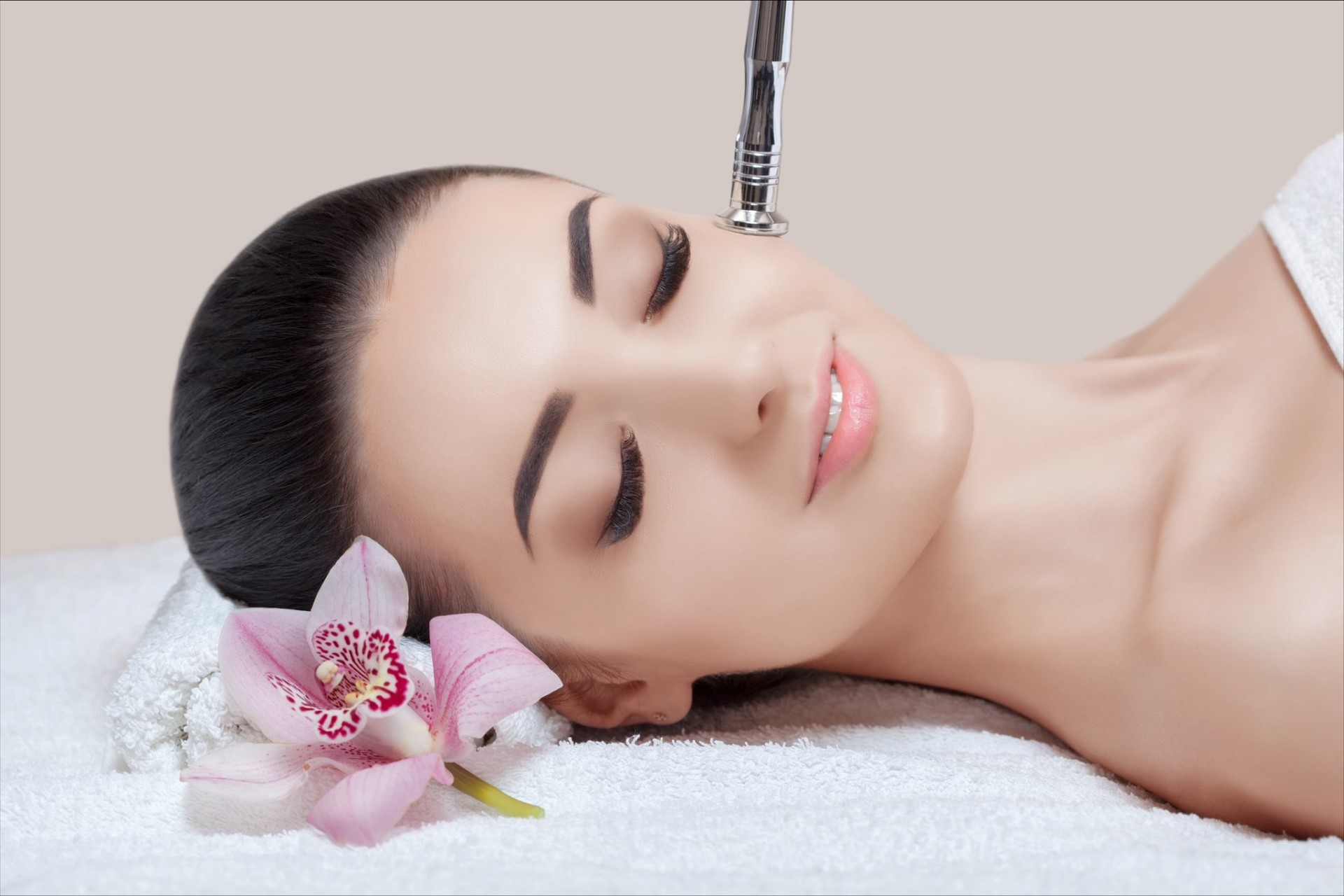
Understanding Acne Scars
Why Scar Type Matters
Inflammatory acne can damage skin tissue as a breakout heals. When the body produces too little collagen during healing, a depressed or indented scar may develop. When it produces too much collagen, the result may be a raised or thickened scar.
Not every mark left by acne is a true scar.
Flat brown, gray, red, or pink marks usually represent post-inflammatory discoloration rather than a structural scar. These marks often fade with time, although treatment and sun protection may help improve their appearance.
A patient may have several concerns at once, including:
- Depressed acne scars
- Raised scars
- Uneven surface texture
- Brown or gray discoloration
- Red or pink marks
- Enlarged appearing pores
- Active breakouts
- Ongoing inflammation
Each concern may require a different approach. Treating pigmentation will not fill an indented scar, and stimulating collagen is not the correct approach for every raised scar.
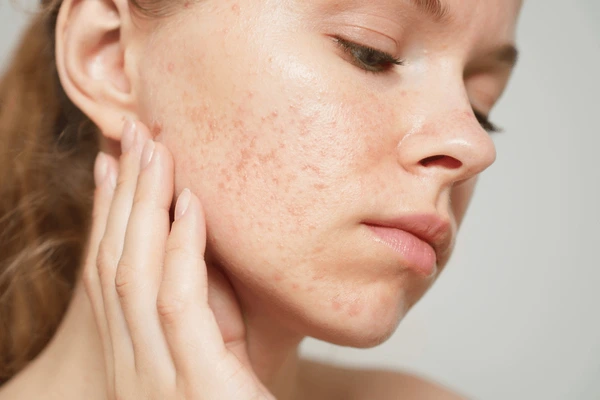
Active Acne
Control Breakouts Before Aggressive Scar Treatment
Preventing new scars is an important part of any acne scar plan. Performing an intensive resurfacing treatment while inflammatory acne remains active may increase irritation, spread bacteria, delay healing, or allow new scars to form while older ones are being addressed.
Erika will evaluate whether your acne is sufficiently controlled before beginning microneedling or another scar-focused procedure.
If you have moderate to severe acne, painful cysts, nodules, widespread inflammation, or breakouts that have not responded well to over the counter care, Erika may recommend evaluation by a dermatologist or another qualified healthcare provider.
Professional scar treatment does not replace appropriate medical management of active acne.
Types of Acne Scars and Marks
Different Concerns Require Different Treatment Plans
Ice Pick Scars
Boxcar Scars
Rolling Scars
Hypertrophic Scars
Keloids
Post-Inflammatory Hyperpigmentation
Post-Inflammatory Erythema
Treatment Options
Acne-Scar Services at Aria Aesthetics
The most appropriate option depends on whether the primary concern is structural scarring, surface texture, congestion, redness or discoloration.
| Treatment | May be considered for | Important limitations |
|---|---|---|
|
Standard microneedling |
Selected depressed scars and uneven texture |
Will not correct every ice-pick, tethered rolling, or raised scar |
|
Laser Resurfacing |
Selected acne scars and textural concerns |
Carries additional risks and must be distinguished from standard resurfacing |
|
HydraFacial |
Congestion, dullness, hydration and surface appearance |
Does not rebuild deep structural scars |
|
Microdermabrasion |
Mild surface roughness and dullness |
Cannot fill deep or tethered scars |
|
PRP with Microneedling |
Optional off label adjunct |
Evidence varies; microneedling devices are not FDA cleared to deliver PRP into skin |
|
Exosome therapy |
Optional adjunct to selected treatments |
No FDA approved exosome products; benefits must not be guaranteed |
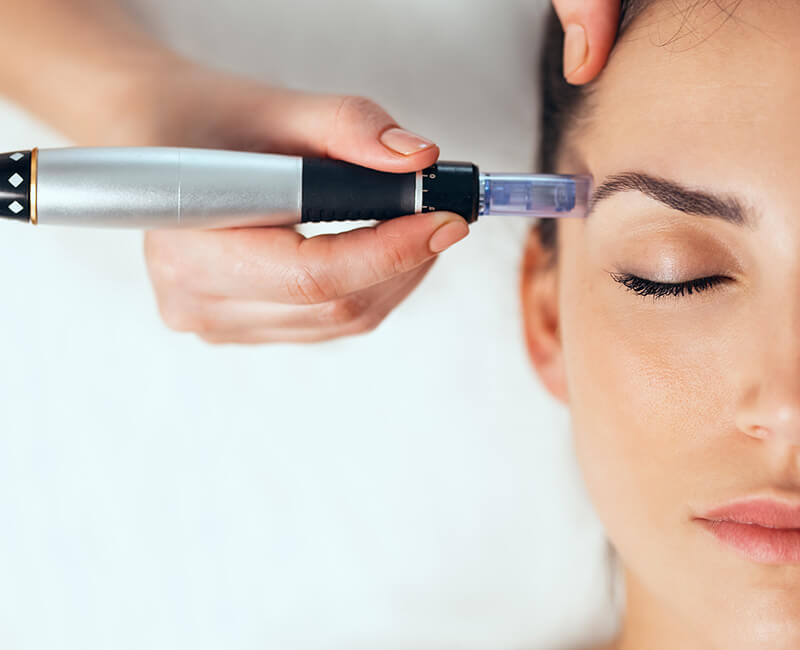
Standard Microneedling
Collagen Induction Treatment for Selected Depressed Scars
Standard microneedling uses fine needles to create controlled microchannels in the skin. The healing response may support new collagen and gradually soften the appearance of certain depressed acne scars.
It may be considered for:
- Shallow boxcar scars
- Some rolling scars
- Mild to moderate atrophic scarring
- Uneven texture
- Selected pigmentation concerns
Standard microneedling does not use radiofrequency energy. It must not be confused with laser resurfacing.
Results develop gradually and usually require more than one treatment. Complete scar removal can sometimes be attained.
Laser Resurfacing
Improving Acne Scars and Uneven Skin Texture
Laser resurfacing uses focused light energy to stimulate collagen production and improve the appearance of selected acne scars and textural concerns. It can soften the appearance of scars, but it does not completely remove them. Treatment may be combined with other procedures depending on the type and depth of scarring.
Different approaches include:
- Ablative lasers: Remove targeted skin tissue and heat underlying layers to encourage collagen remodeling. These treatments generally require more recovery time.
- Nonablative lasers: Heat underlying tissue without removing the skin’s surface. Recovery is generally shorter, although multiple sessions may be needed.
- Fractional resurfacing: Treats microscopic columns of skin while leaving surrounding tissue untreated. Fractional technology can be ablative or nonablative.
Potential side effects and complications depend on the laser and treatment intensity and may include:
- Redness, swelling, itching, and discomfort
- Burns or blistering
- Darkening or lightening of treated skin
- Infection, including reactivation of cold sores
- Persistent redness or prolonged healing
- New or worsened scarring
Before treatment, ask which laser will be used, why it is appropriate for your scars and skin tone, who will perform the procedure, and what training and experience that provider has. Your consultation should also cover expected results, recovery time, aftercare, and sun protection.
Laser resurfacing requires careful planning for darker skin tones because some treatments carry a higher risk of burns and lasting pigmentation changes. Device selection, settings, scar characteristics, and provider experience all matter when developing an individualized treatment plan.
HydraFacial
Surface Care for Congestion and Overall Appearance
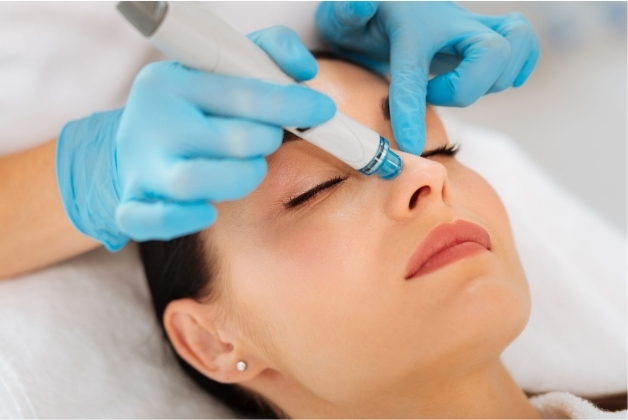
HydraFacial combines cleansing, exfoliation, extraction and hydration. It may improve the appearance of congestion, dryness, dullness and mild surface irregularity.
HydraFacial does not fill depressed acne scars, release tethered scars, or flatten raised scars.
It may be incorporated into a broader skin care plan when the patient’s primary concerns include congestion, hydration or overall surface appearance.
Microdermabrasion
Gentle Surface Exfoliation

Microdermabrasion removes dead cells from the outer surface of the skin. It may temporarily improve smoothness and brightness and make mild surface irregularities less noticeable.
It does not reach deeply enough to correct significant boxcar, rolling, or ice-pick scars.
Microdermabrasion may be inappropriate when the skin is inflamed, highly sensitive, recently treated, or prone to pigmentation changes.
PRP With Microneedling
An Optional Off Label Combination
PRP is prepared from a sample of the patient’s own blood. Some providers apply or inject PRP as an adjunct to microneedling.
This combination should not be marketed as consistently producing better results than microneedling alone. Research findings vary according to PRP preparation, treatment technique, scar type, and study design.
Microneedling devices are not FDA cleared specifically for delivering blood products such as PRP into the skin.
Before treatment, Erika will explain:
- How the PRP will be prepared
- Whether it will be applied or injected
- The off label nature of the treatment
- Potential risks and limitations
- Available alternatives
- Additional cost
- What evidence supports the recommendation
Possible PRP-related risks include pain, bleeding, bruising, swelling, infection and an unsatisfactory result.
Exosome Therapy
An Adjunct Requiring Clear Product Disclosure
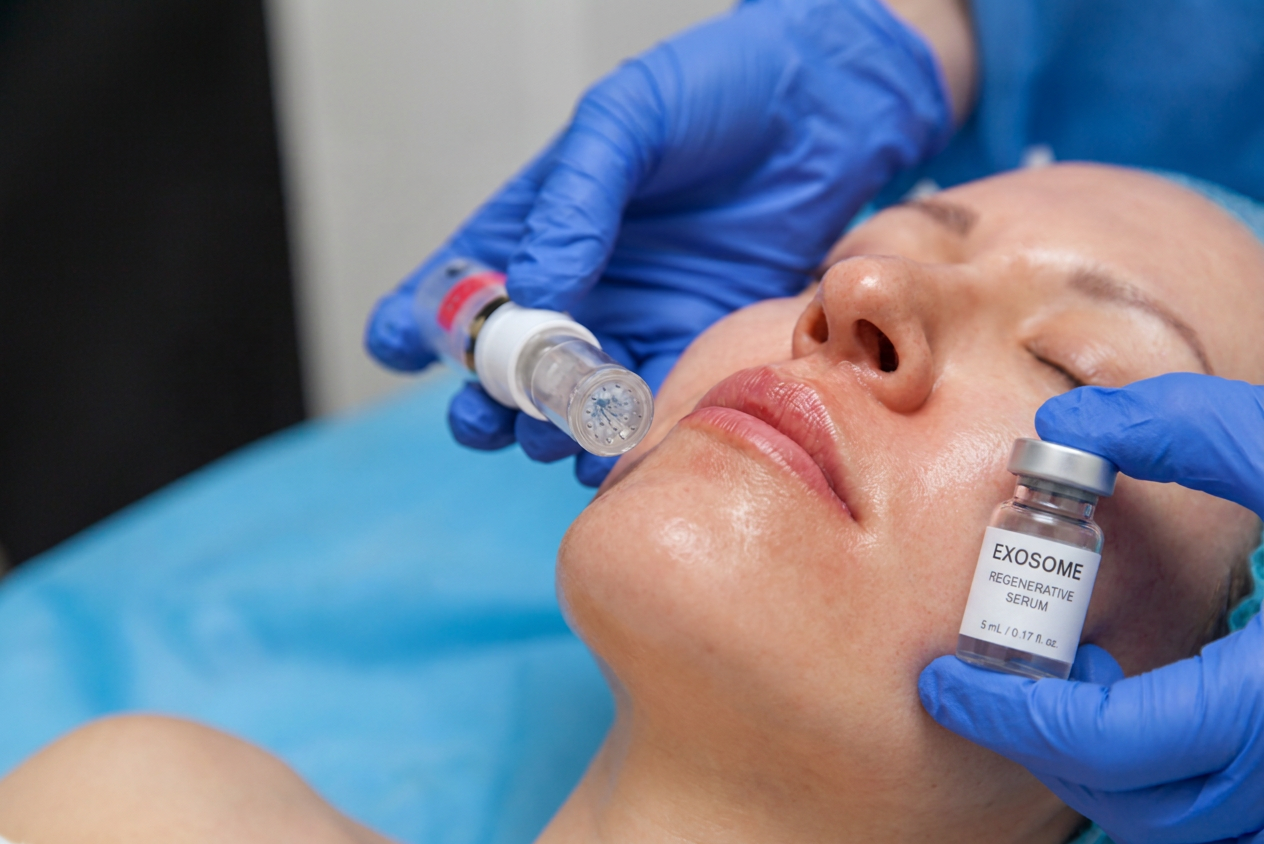
Aria Aesthetics offers exosome therapy as an adjunct to select skin treatments.
There are currently no FDA approved exosome products. Exosome therapy should not be described as proven to activate fibroblasts, regenerate scarred tissue, accelerate healing, or improve acne scars more effectively than established treatments.
Before treatment, Erika will explain:
- The product name and manufacturer
- The source and composition of the product
- How the product will be used
- Its regulatory status
- Available supporting evidence
- Known and potential risks
- Reasonable limitations
- Alternative options
Terms such as “cellular,” “regenerative,” and “advanced” do not establish that a product has been proven safe or effective.
Combining Treatments
A Combination Plan Must Have a Clear Purpose
Patients often have more than one acne-related concern. A treatment plan may need to address structural scarring, active breakouts, discoloration, redness and general skin health separately.
That does not mean stacking several treatments automatically produces a better result.
A combination plan should explain:
- Which concern each treatment is intended to address
- Why the treatments are being combined
- Appropriate spacing between procedures
- Cumulative irritation or pigmentation risks
- Total cost
- Expected recovery
- How progress will be measured
- When the plan should be changed or discontinued
Over-treating the skin can worsen inflammation, delay healing or create new pigmentation.
Consultation
What to Expect From an Acne-Scar Evaluation
Review Your Acne and Treatment History
Erika will ask about active breakouts, previous acne medications, isotretinoin use, current skincare, past procedures, allergies, and how your skin typically heals.
Evaluate Your Scars and Marks
Your skin will be assessed for depressed scars, raised scars, tethering, pigmentation, redness, active acne, and overall sensitivity.
Most patients have more than one type of scar or mark.
Consider Your Skin Tone and Healing History
Treatment settings and procedure choices must account for your risk of hyperpigmentation, hypopigmentation, keloids, prolonged redness, and delayed healing.
Determine Whether Referral Is Appropriate
Erika may recommend dermatologist care when you have:
- Active cystic or nodular acne
- Deep ice-pick scars
- Deeply tethered rolling scars
- Significant raised scars or keloids
- Suspected infection
- Unexplained inflammation
- A history of severe pigment changes
- A condition requiring prescription treatment
- Scars likely to respond better to surgery, subcision, laser, filler, or targeted chemical treatment
Build a Realistic Treatment Plan
If a service offered at Aria Aesthetics may be appropriate, Erika will explain the proposed treatment, risks, cost, recovery timelines,available alternatives, expected timeline and limitations.
There is no obligation to proceed.
Results
Improvement Is Realistic. Complete Erasure can Sometimes Be Attained.
Acne scars are permanent structural changes, but treatment may make them less noticeable.
The degree of improvement depends on:
- Scar type
- Scar depth
- Number and distribution of scars
- Skin tone
- History of pigmentation or abnormal scarring
- Treatment selected
- Number of sessions
- Healing response
- Control of active acne
- Sun exposure
- Adherence to aftercare
Collagen remodeling occurs gradually. Changes may continue developing for weeks or months after treatment.
No responsible provider can guarantee complete scar removal, a specific percentage of improvement, or a universal number of sessions.
Consistent photographs may be used to monitor progress under similar lighting, positioning and camera settings.

Sun Protection
Protecting Your Skin During Treatment
Sun exposure can deepen post-inflammatory hyperpigmentation and increase the risk of uneven pigmentation after resurfacing procedures.
Before and after treatment:
- Avoid intentional tanning
- Tell Erika if you have a recent tan or sunburn
- Use broad spectrum sunscreen as directed
- Follow instructions about hats and physical sun protection
- Avoid direct exposure while the skin is healing
- Do not pick, scrub or peel treated skin
- Follow the recommended timeline for restarting active skincare products
South Florida sun exposure is year round, so sun protection must be part of the treatment plan rather than an occasional afterthought.
Why Choose Aria Aesthetics?
A Thoughtful Plan Without Empty Promises
- Every Consultation Is Conducted by Erika
Erika personally evaluates your skin, develops your treatment plan, performs your procedure and provides aftercare guidance.
- Scar Type Comes Before Treatment Choice
A treatment is not recommended simply because it is available. The structure and depth of your scars determine what may be appropriate.
- Clear Treatment Boundaries
Erika will explain when a concern falls outside the reasonable capabilities of microneedling, HydraFacial, microdermabrasion, PRP or exosome therapy.
- Referral When Appropriate
Patients who may benefit from subcision, laser treatment, scar surgery, filler, corticosteroid injections or another specialized procedure will be advised to seek an appropriately qualified provider.
- Individualized Risk Assessment
Skin tone, pigment history, active acne, medications, medical conditions, and healing history will be considered before treatment.
Treatment Overview
Acne-Scar Treatment at a Glance
| Treatment detail | What to expect |
|---|---|
|
Provider |
Erika Magarian, ARNP |
|
Primary treatment options |
Standard microneedling and Laser Resurfacing |
|
Supportive treatments |
HydraFacial and microdermabrasion |
|
Optional adjuncts |
PRP and exosome therapy |
|
Number of sessions |
Determined individually |
|
Results
|
Gradual improvement rather than complete removal |
|
Downtime |
Depends on the treatment and intensity |
|
Common temporary effects |
Redness, swelling, sensitivity, dryness, peeling or pinpoint bleeding |
|
Pigmentation risk |
Varies by skin tone, procedure, settings and sun exposure |
|
Pricing |
Based on the selected treatment plan |
Safety and Treatment Considerations
What Erika Will Need to Know Before Your Treatment
Tell Erika if you have or experienced:
Recently received a peel, laser, injectable or other facial procedure
An infection, open wound, cold sore, rash or sunburn
Eczema, psoriasis, rosacea or another active skin condition
Pregnancy, plans to become pregnant, or breastfeeding
Diabetes or another condition that may affect healing
Current use of anticoagulants or medication affecting the skin
A history of post-inflammatory hyperpigmentation or hypopigmentation
Allergies to numbing products, skin preparation solutions or treatment ingredients
A bleeding or clotting disorder
Active inflammatory, cystic, or nodular acne
A weakened immune system
Active inflammatory, cystic, or nodular acne
A history of herpes simplex or cold sores
Recently used isotretinoin
Difficulty healing
Do not stop prescription medication unless instructed by the prescribing healthcare provider.
Possible microneedling effects include:
- Redness
- Swelling
- Dryness
- Tightness
- Rough texture
- Itching
- Peeling
- Tenderness or burning
- Bruising
- Bleeding
- Crusting
- Temporary darkening or lightening of the skin
- Cold-sore reactivation
- Infection
- Scarring
- An unsatisfactory result
Contact the practice if you experience worsening pain, increasing redness, drainage, fever, blistering, significant swelling, persistent discoloration, or another concerning reaction.
This is not a complete list of every possible contraindication, risk, or side effect.
Frequently Asked Questions
Acne-Scar Treatment Questions
Have a question before booking? We have answered the most common ones below. If you do not see your question here, call us directly at (954) 399-6789 and Erika or a team member will be happy to help.
Acne scars can often be made less noticeable, but complete removal is rarely possible. The degree of improvement depends on the scar type, depth, treatment and individual healing response.
There is no single best treatment for every scar. Every scar is different and can respond to vastly different treatments. Shallow depressed scars may respond to microneedling, while deep ice-pick scars, tethered rolling scars and raised scars often require different procedures or specialist care.
The number of sessions depends on your scar types, treatment, healing response and desired results and goals. Erika will recommend an initial plan and reassess your progress rather than promising a universal number.
Surface changes may become noticeable sooner, while collagen remodeling develops over weeks or months. Final evaluation should not occur immediately after a treatment series.
Comfort varies by treatment, intensity, and patient. A topical numbing product may be used for microneedling, but pressure, stinging, heat or discomfort can still occur.
Downtime depends on the procedure. Standard microneedling may cause redness, sensitivity, swelling, dryness or pinpoint bleeding. RF microneedling may involve more significant effects and risks.
Patients across a wide range of skin tones may be candidates, but the same device, settings and treatment plan are not appropriate for everyone.
Darker skin tones may have a greater risk of post-inflammatory hyperpigmentation after certain procedures. Device authorization may also apply only to specific skin types or treatment areas.
In most cases, controlling active inflammatory acne is an important first step. Treating existing scars while new scars continue forming is not an effective long term strategy.
No. Flat brown, gray, red, or pink marks are usually post-inflammatory discoloration. True scars involve a structural change, such as an indentation or raised area.
Neither should be presented as a guaranteed enhancement.
PRP used with microneedling is an off-label combination, and microneedling devices are not FDA-cleared to deliver PRP into the skin. There are currently no FDA approved exosome products.
Erika will explain the evidence, regulatory status, risks, cost and limitations before recommending either adjunct.
Call Aria Aesthetics at (954) 399-6789 or submit the consultation request form. Same-week appointments may be available.
Start With a Professional Evaluation
Schedule Your Complimentary Acne-Scar Consultation
Your consultation is an opportunity to identify which concerns are true scars, which are discoloration, and which treatments may reasonably help.
Erika will explain your options, risks, recovery, expected costs, alternatives and realistic limitations before you make a decision.
If your scars require a treatment not available at Aria Aesthetics, that should be explained before you invest in a procedure unlikely to produce the improvement you want.
Aria Aesthetics is located in Hollywood, Florida, approximately one mile west of Hollywood Beach. The practice serves patients from Hollywood, Fort Lauderdale, Hallandale Beach, Miramar, Pembroke Pines, Davie, Dania Beach, Aventura, and surrounding South Florida communities.